
When I built CostaRicaDivers.com from scratch, local SEO was not optional. It was the entire business model. Tourists searching for scuba diving needed to find us before they found the competition across the street. The same applies to any water sports operation, whether you run a kitesurfing school in Tarifa or a dive center in Lanzarote.
This guide walks you through exactly how to set up and optimize local SEO for water sports businesses. I have done this for dive operations, surf schools, and sailing charters across three continents. The principles are consistent, but the execution details matter enormously.
Why Local SEO Matters More for Water Sports Than Other Tourism Businesses?
Water sports businesses have a unique local SEO advantage that most operators fail to exploit. Unlike hotels or restaurants, your customers are often making decisions within a 24 to 48 hour window. Someone arrives in Lanzarote on Saturday, decides they want to try diving on Sunday, and searches that morning.
This compressed decision timeline means the business that shows up first in Google Maps usually wins. I have tracked this across multiple dive centers I have worked with. The correlation between Google Business Profile ranking and booking volume is stronger than any other traffic source, including paid ads.
The other factor is trust.
Water sports carry perceived risk. A potential customer seeing your dive center with 200 reviews and a 4.8 rating will choose you over a competitor with 30 reviews and a 4.5 rating, even if the competitor is technically closer. Reviews function as social proof for safety, which is why review acquisition strategy is non-negotiable in this industry.
Google Business Profile Setup for Water Sports Operations
Your Google Business Profile is the foundation. Get this wrong and nothing else matters. I have audited dive centers that ranked nowhere despite having excellent websites, simply because their GBP was misconfigured.

Category Selection: The Decision That Shapes Everything
Google offers multiple categories that seem relevant to water sports, and choosing wrong limits your visibility. For dive centers specifically, you have three main options.
- Scuba Diving Instructor signals you offer training and courses.
- Diving Center signals a full service operation with equipment, boats, and multiple instructors.
- Scuba Tour Agency signals you coordinate dive trips rather than operate them directly.
If you run a full dive center with your own boats, equipment rental, and a team of instructors, your primary category should be Diving Center. Add Scuba Diving Instructor as a secondary category if you offer certification courses.
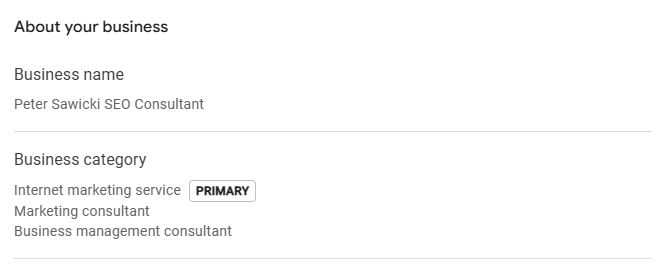
An incorrect category in GBP limits visibility
I made the mistake early on of using Scuba Tour Agency for CostaRicaDivers because we organized multi-day dive trips. This limited our visibility for people searching for local dives and courses. Switching to Diving Center as primary expanded our search footprint significantly.
Categories for kitesurfing schools
For kitesurfing schools, the category structure is different.
- Kiteboarding School is your primary. Add
- Water Sports Equipment Rental as secondary if you rent gear without lessons.
- Windsurfing Store applies only if you sell equipment retail.
A kitesurfing school I consulted with was categorized as Sports School, which is far too generic. Changing to Kiteboarding School primary with Water Sports Equipment Rental secondary increased their Map Pack appearances by over 40% within two months.
Business Name: Avoid Keyword Stuffing Penalties
Google penalizes businesses that stuff keywords into their official name. I have seen dive centers named “Scuba Diving Best Dive Center PADI 5 Star” get suspended. Your business name must match your legal registered name exactly.
If your legal name is Costa Rica Divers S.A., your GBP name should be Costa Rica Divers S.A. Not Costa Rica Divers Scuba Diving Playas del Coco. This seems obvious, but over half the water sports GBPs I audit have some form of keyword stuffing.
This is becoming increasingly important, as Google is suspending business listings en masse in 2026 due to various inaccuracies. What used to work, even if it was on the borderline of acceptable practices, no longer does.

Service Area vs Physical Location
Most water sports businesses operate from a physical location but serve customers across a wider area. A dive center in Puerto del Carmen serves tourists staying in Costa Teguise and Playa Blanca too.
Configure your GBP to show your physical address while also defining service areas for nearby towns. This allows you to appear in searches like diving near Costa Teguise even though your shop is in Puerto del Carmen.
Do not hide your address unless you truly operate without a physical location. Hidden addresses reduce trust signals and typically hurt Map Pack rankings.
Photo Strategy: What Actually Works for Water Sports?
Google prioritizes businesses with recent, high quality photos. But the type of photos matters as much as quantity. I have tested this extensively across multiple profiles.
Photos That Drive Clicks and Conversions
Your cover photo should show people engaged in the activity, not a static shop front. For a dive center, this means divers underwater with marine life visible. For a kitesurfing school, students mid-jump with the beach and water behind them.
Beyond the cover, structure your photos into categories.
- Underwater shots showing marine life specific to your location. A dive center in Lanzarote should feature angel sharks and the Museo Atlántico. A Costa Rica operation should show bull sharks, mantas, and tropical reef life. These location-specific images differentiate you from competitors.
- Certification and credentials photographed clearly. Your PADI 5 Star sign, SSI Diamond Center plaque, DAN membership certificate. Photograph these in your shop and upload them. This builds trust for safety-conscious customers.
- Boat and equipment in excellent condition. Your RIB, compressor room, BCD rack, Nitrox blending station. Customers want to see that you invest in gear maintenance.
- Team photos showing actual instructors, not stock images. Include photos of instructors with name tags or wearing staff rashguards. This humanizes your operation.
- Student success moments capturing certification completions, first dives, first successful jumps. These create emotional connection and demonstrate outcomes.
Upload new photos at least monthly. GBP favors recency. A profile with 200 photos all uploaded two years ago performs worse than a profile with 80 photos uploaded consistently over time.
NAP Consistency Across Water Sports Directories
NAP stands for Name, Address, Phone number. Google uses NAP consistency across the web to verify your business legitimacy. For water sports businesses, this means managing listings on industry-specific directories that general local SEO guides never mention.
Essential Directories for Dive Centers
- PADI Dive Shop Locator is the most authoritative directory for PADI affiliated centers. Ensure your listing matches your GBP exactly, including address format and phone number with country code.
- SSI Dive Center Finder serves the same function for SSI affiliated operations. If you hold both affiliations, maintain both listings with identical NAP.
- DAN (Divers Alert Network) membership directory lists affiliated dive centers. This carries trust signals both for Google and for safety-conscious divers.
- BSAC Center Finder matters if you cater to British divers, which many European dive centers do.
- Scubaboard business directory has authority in the diving community and passes citation signals.
For kitesurfing schools, the equivalent directories include IKO Center Finder, BKSA School Directory, and sport-specific portals like Kitesurf.com and Kiteworldmag.com business listings.
Format Consistency That Matters
The details trip people up. If your GBP lists Calle Principal 42, Local 3 and your PADI listing shows C/ Principal 42 Local 3, Google sees potential inconsistency.
Standardize on one format and use it everywhere. Include or exclude commas consistently. Write out Calle or abbreviate C/ consistently. Use the same phone format with country codes everywhere.
I use a simple spreadsheet to track all listings with the exact NAP format. When anything changes, like a phone number, I update every listing within the same week.
Review Acquisition Strategy for Water Sports
Reviews are the single highest impact factor for local rankings in competitive water sports markets. A dive center in Lanzarote competing against 15 other operations needs a systematic review acquisition process.
Timing Your Review Request
The optimal moment to request a review from a water sports customer is immediately after the high point of their experience. For divers, this is when they surface from an exceptional dive, not when they return to the shop or the next day.
I implemented a system at CostaRicaDivers where divemasters would mention the review request verbally on the boat ride back, while customers were still buzzing from the dive. The actual follow-up email went out two hours later, not 24 hours later.
Conversion rates dropped by over 60% when we tested next-day emails versus same-day emails sent within four hours of the activity.
Localization issue
I also need to mention a relatively new issue that has been observed on Google’s end. Namely, there are increasing indications that Google is removing reviews posted from the same location as your business and from the same IP address.
What does this mean? If you have a customer in your office and ask them to leave a review right away, Google treats it as coerced and unnatural. I know this doesn’t make much sense… After all, no one is holding a gun to their head, and a satisfied customer just wants to leave that review as soon as possible.
It seems, however, that you should ask for a review but not insist on getting one right away. Just send a follow-up email.
Handling Negative Reviews in Water Sports
Negative reviews in water sports often involve safety perceptions or weather cancellations, both emotionally charged topics. Your response strategy matters for both the reviewer and future customers reading the exchange.
Respond within 24 hours. Acknowledge the specific complaint. Explain context without being defensive. Offer to continue the conversation offline.
Personally, I had an incident that I’ve already described in a few posts. We received a 1-star rating with no additional comment. It was a review posted by our competition, which was later confirmed. We weren’t able to have it removed, so the only thing I could do was respond to it in a professional manner. That very response later brought us customers, because, as they themselves said, they liked the way I responded.

Local Content Strategy for Water Sports Businesses
Your website needs locally relevant content that supports your GBP. This means more than a homepage that mentions your location once.
Location-Specific Dive Site Guides
Create individual pages for each major dive site you visit. A Lanzarote dive center should have separate pages for Mala Wreck, Museo Atlántico, Playa Chica, and Cathedral Cave.
Each page should include depth ranges, typical marine life, skill level requirements, best seasons, and what makes this site unique. Add photos from that specific site.
These pages rank for long-tail searches like angel shark diving Lanzarote or underwater museum Lanzarote diving that indicate high purchase intent.
Seasonal Content for Water Sports
Water sports have seasonal patterns that create content opportunities. A kitesurfing school in Tarifa should publish content about wind conditions by month, targeting searches like best time to kitesurf in Tarifa.
A dive center should cover water temperature, visibility patterns, and seasonal marine life. Bull shark season in Costa Rica or manta ray season in Lanzarote are high-intent search terms that general tourism sites rarely target effectively.
Course and Certification Pages
Each certification level you offer deserves its own page. PADI Open Water Lanzarote should be a dedicated URL, not a section buried on a general courses page.
Include pricing, duration, what is included, prerequisites, and what students can do after certification. Answer the questions people actually ask before booking.
You can read more about SEO for dive centers here: SEO for Dive Centers: How to Get Found Before the Big Aggregators?
Technical Local SEO Elements
Beyond GBP and content, your website needs technical elements that reinforce local relevance.
LocalBusiness Schema Markup
Implement LocalBusiness schema with SportsActivityLocation as your type. Include your NAP, operating hours, geo coordinates, and price range.
Test implementation using Google’s Rich Results Test. Errors in schema can prevent rich results entirely.
Hreflang for Multi-Language Water Sports Sites
If you serve international tourists, you likely have content in multiple languages. A Tarifa kitesurfing school might have Spanish, English, and German versions.
Implement hreflang correctly to avoid duplicate content issues and ensure each language version ranks in appropriate markets. I have seen dive centers accidentally competing against themselves because of broken hreflang implementation.
Mobile Performance
Tourists search on mobile. Often on slow hotel WiFi or cellular data. Your site must load fast on mid-range devices with mediocre connections.
Target under 2.5 seconds for Largest Contentful Paint on mobile. Compress images aggressively. Use lazy loading for below-fold content. Every second of delay costs bookings.

Frequently Asked Questions
How long does it take to see local SEO results for a new water sports business?
Expect three to six months for meaningful GBP ranking improvements in moderately competitive markets. I have seen faster results when starting with an established website that already has domain authority. A completely new business with a new domain will take longer, closer to six to nine months for consistent Map Pack visibility.
Should I create separate GBP listings for each activity I offer?
No. If you operate from one location offering diving and snorkeling, maintain one GBP with multiple secondary categories. Creating multiple listings for the same address violates Google guidelines and risks suspension. The exception is if you genuinely operate distinct brands from separate physical locations.
How important are GBP posts for water sports businesses?
GBP posts provide modest ranking benefit but stronger click-through impact. I recommend posting weekly during peak season, biweekly during off-season. Highlight special trips, marine life sightings, student certifications, and seasonal conditions. Each post stays visible for seven days, so consistency matters more than individual post quality.
Can I rank in multiple cities with one GBP listing?
You can rank in nearby areas by setting service areas, but you will always rank best in your physical location city. If tourists stay primarily in one town but your center is in another, consider whether a physical satellite location makes business sense. Some dive centers maintain small booking offices in tourist hubs specifically for local SEO benefit.
What review rating should I target for water sports?
Below 4.5 stars hurts conversions noticeably in water sports because perceived safety matters. Target 4.7 or higher. If you are currently below 4.5, review acquisition from satisfied customers should be your immediate priority. Volume of reviews matters, but rating matters more for conversion rates in activities with perceived risk.
How do I handle reviews left on the wrong platform?
If customers leave TripAdvisor reviews when you wanted Google reviews, do not complain. Thank them and ask if they would mind also sharing on Google since it helps new customers find you. Provide the direct link. About 30% will follow through in my experience. Never ask them to copy-paste, as Google detects this and may filter duplicates.
Get Your Water Sports Business Ranking Locally
Local SEO for water sports is not complicated, but it requires consistent execution across GBP optimization, citation management, review acquisition, and local content development. Most water sports operators I audit are missing at least two of these four pillars.
If you want a specific assessment of where your dive center, surf school, or kitesurfing operation stands, I offer local SEO audits tailored to water sports businesses. Get in touch through the contact page and let me know your current setup and goals.

About the Author
I’m Peter Sawicki, a Destination SEO Strategist helping tourism brands and DMOs grow their online presence through SEO, technical audits, and creative digital strategies. Over the years I’ve worked across multiple countries and markets, which gives me a global perspective on every project I take on. When I’m not optimizing websites, you’ll most likely find me underwater. Scuba diving is where my two biggest passions meet.